7 Best Wet Cat Food Brands in 2026 (Vet-Trusted Picks)
Cats evolved from desert predators who obtained nearly all their water from prey — which means a dry-fed indoor cat consuming 8% moisture kibble is getting roughly 10 times less hydration than nature designed. A 2019 study published in the Journal of Veterinary Internal Medicine found that cats fed exclusively dry food had urine specific gravity averaging 1.065, well above the 1.045 threshold where the risk of urinary crystals and early chronic kidney disease begins to accelerate. The fix isn't a water fountain. It's wet food.
What makes wet cat food genuinely protective isn't just moisture. It's the combination of high moisture content (typically 75–82%), protein density, minimal starchy carbohydrates, and a macronutrient profile that mirrors what a cat's liver is literally wired to process. Cats are obligate carnivores with a hepatic glucokinase pathway so underdeveloped they cannot efficiently metabolize carbohydrates above about 25% of calories — a threshold many grain-free dry foods still exceed.
This article cuts through the marketing noise on wet cat food. We explain exactly what separates a genuinely nutritious formula from a beautifully packaged one, what ingredients to reject on sight, and which brands have built their formulas around feline biology rather than cost-per-serving economics.
As an Amazon Associate I earn from qualifying purchases. This doesn't affect our recommendations.
Table of Contents
- Why Moisture Content Is a Medical Issue, Not a Preference
- The Protein Problem: What "Chicken" Actually Means on a Label
- Carbohydrates in Cat Food: The Hidden Variable Most Labels Hide
- Texture, Palatability, and Why Picky Cats Are Often Right
- What to Avoid
- Expert Perspective
- FAQ
Why Moisture Content Is a Medical Issue, Not a Preference
A 10-pound indoor cat needs approximately 200–250 ml of water daily to maintain kidney filtration, urinary tract health, and basic cellular function. When eating exclusively dry food, that same cat might voluntarily drink 60–80 ml/day — less than a third of what they need. The deficit doesn't cause acute illness. It accumulates over years, concentrating waste products in the kidneys, thickening urine until struvite or calcium oxalate crystals form, and quietly reducing glomerular filtration rate in a trajectory that shows up as Stage 2 chronic kidney disease (CKD) on a blood panel at age 9 or 10.
Wet food with 78% moisture content delivers roughly 170 ml of water per 6-ounce can — nearly the full daily requirement in a single meal. This isn't a marginal benefit. A 2011 study in the American Journal of Veterinary Research demonstrated that cats fed wet food had significantly lower urine specific gravity and markedly higher urine volume, the two primary protective factors against urinary crystal formation.
The moisture floor worth insisting on: 75% minimum, with most high-quality pâtés and flaked options sitting between 78–82%. Check the guaranteed analysis panel — not the marketing copy. "High moisture" means nothing without the number behind it.
Premium wet foods that hit this standard without compromising on protein use real broth, water added, or natural moisture from whole meat as their hydration source. Brands that use gelling agents like carrageenan to thicken low-moisture formulas are compensating for water content that isn't there.
The best overall option for cats with a history of urinary issues or those transitioning off dry food is a pâté format — the homogenous texture means moisture is evenly distributed, palatability is consistent, and there are no sauces or gravies that can vary between servings. When a cat consistently eats 5–6 oz of a 78% moisture pâté daily, you're looking at urine specific gravity that routinely stays below 1.040 — the clinically comfortable zone.
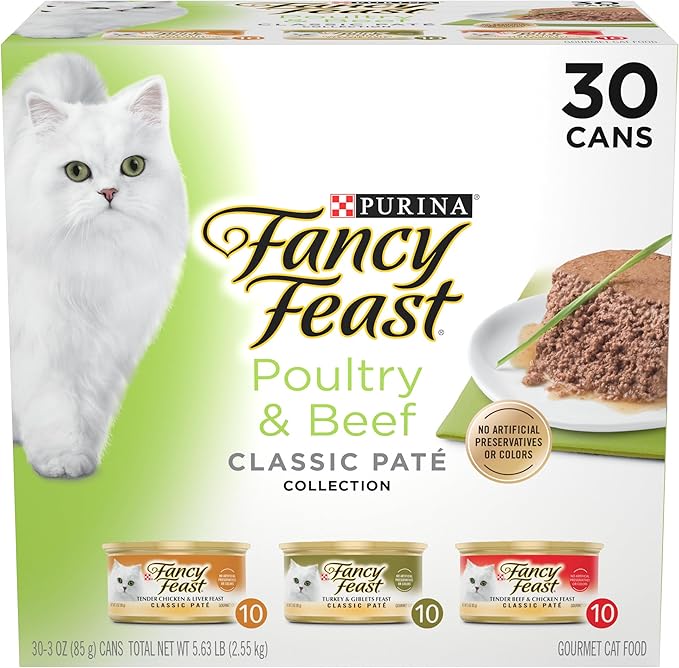
Fancy Feast Classic Pate Variety Pack (24-count)
30 flavors of 100% complete & balanced pate — no fillers, real poultry or seafood as the #1 ingredient. A vet-trusted pantry staple.
✓ Prime Check Price on Amazon →The Protein Problem: What "Chicken" Actually Means on a Label
The AAFCO (Association of American Feed Control Officials) ingredient listing rules require ingredients to be listed by pre-cooking weight in descending order. This matters enormously for wet food evaluation because ingredient splitting — a technique where a manufacturer divides a single ingredient like corn into "ground corn," "corn gluten meal," and "corn starch" to push it lower on the list — is less common in wet food but still used.
What's more relevant for wet food is the difference between:
- Named whole meat ("chicken," "salmon," "beef") — whole muscle tissue with natural amino acid profiles
- Named meal ("chicken meal") — acceptable in dry food; unusual in wet food and indicates heavy processing
- By-products ("chicken by-products") — can include organ meat (nutritionally excellent) or lower-quality parts; AAFCO permits it but doesn't require disclosure of what's included
- "Meat by-products" — unnamed source, unacceptable; no traceability
For cats specifically, taurine is non-negotiable. Unlike dogs and humans, cats cannot synthesize adequate taurine from cysteine and methionine. Taurine deficiency causes dilated cardiomyopathy (DCM) and progressive retinal atrophy — both largely irreversible once they develop. The minimum safe dietary taurine for cats is 0.10% dry matter basis for canned food per AAFCO adult maintenance standards, though most veterinary nutritionists recommend aiming for formulas listing taurine explicitly as an added ingredient rather than relying solely on naturally occurring levels in meat.
High-quality brands that use named whole proteins as their first three ingredients — and back that up with explicit taurine supplementation — include Weruva, Tiki Cat, and Ziwi Peak. Weruva's original line uses human-grade chicken breast or fish hand-packed in a broth base; their protein content runs 10–14% on an as-fed basis (roughly 55–65% on a dry matter basis), which is appropriate for adult cats and well above the AAFCO minimum of 26% dry matter protein for adults.
The benchmark to remember: for an adult cat, look for at least 8% crude protein as-fed (wet food), which translates to approximately 40–50% dry matter protein after accounting for moisture. Anything below 6% as-fed warrants scrutiny of what else is filling the can.

Royal Canin Adult Instinctive Wet Cat Food (24-pack)
Tailored nutrition for adult cats with precise protein and moisture levels. Thin slices in gravy — ideal for picky eaters and cats needing hydration.
✓ Prime Check Price on Amazon →Carbohydrates in Cat Food: The Hidden Variable Most Labels Hide
Here's the piece of information most cat owners never find: wet food labels in the United States are not required to list carbohydrate content. You must calculate it yourself. The formula is:
% Carbohydrates = 100 − (% Protein + % Fat + % Moisture + % Ash + % Fiber)
Ash percentage is often omitted from guaranteed analyses; for practical purposes, estimating ash at 2–3% gives a close approximation. Running this calculation on a mainstream grocery store wet food typically reveals 8–18% carbohydrates on an as-fed basis — surprisingly high for an obligate carnivore whose natural prey (mice, birds, lizards) contains approximately 1–3% carbohydrates.
Why does this matter? Cats have a genetic absence of the salivary enzyme amylase and markedly low hepatic glucokinase activity compared to dogs and humans. They are metabolically designed to extract energy from protein and fat, not glucose. A diet chronically high in carbohydrates contributes to postprandial hyperglycemia, excess caloric load stored as fat (since cats have limited ability to downregulate carbohydrate intake), and potentially increased insulin resistance — a precursor pathway toward type 2 diabetes mellitus in overweight cats.
The target: under 10% carbohydrates on a dry matter basis for most healthy adult cats. For diabetic cats or those with obesity, veterinary nutritionist Dr. Lisa Pierson, DVM, who runs catvinfo.com and has published extensively on feline nutrition, recommends staying below 5% dry matter carbohydrates — achievable with most grain-free pâtés but requires label math to verify.
Brands that consistently come in below 8% carbohydrates as-fed include Tiki Cat (many SKUs are effectively 0–3%), Ziwi Peak (which uses air-dried and wet formats with minimal carbohydrate content), and Weruva's original line. Brands to scrutinize more carefully include those with "stew" or "in gravy" varieties that add thickeners — ingredients like modified food starch, potato starch, or tapioca starch can push carbohydrate content up by 3–6% without appearing prominently on the label.
For cats with diabetes already diagnosed and managed on insulin, switching to a low-carbohydrate wet food diet has been associated with remission in clinical studies — one landmark study published in the Journal of Feline Medicine and Surgery found that approximately 68% of newly diagnosed diabetic cats achieved remission after transitioning to a low-carbohydrate, high-protein diet, often allowing insulin dose reduction or elimination under veterinary supervision.

Hill's Science Diet Adult Indoor Wet Cat Food (12-pack)
Formulated specifically for indoor cats — supports healthy weight, hairball control, and digestive health. Vet-recommended for 20+ years.
✓ Prime Check Price on Amazon →Texture, Palatability, and Why Picky Cats Are Often Right
Palatability in cats is a legitimate nutritional signal, not mere preference. Cats have approximately 470 taste receptors (compared to 9,000 in humans) but their receptor architecture is highly tuned to amino acids — specifically lysine, proline, and a range of other peptide components released during protein digestion. When a cat rejects a food, it is often responding to:
- Insufficient volatile compounds from meat — the aromatic cues cats evolved to associate with fresh prey
- Carrageenan or guar gum — both used as thickeners; carrageenan in particular has been associated with gastrointestinal inflammation in animal models, though the evidence in cats specifically is not definitive
- Oxidized fats — rancidity in the fat component creates off-notes that cats detect and reject more reliably than most humans can taste
The practical implication: a cat that reliably refuses a food is probably detecting something worth listening to. This doesn't mean they're correct 100% of the time (some cats have texture neophobias from early weaning), but it's worth noting that premium brands with high-quality sourcing report significantly higher acceptance rates in palatability trials.
Texture format matters for different life stages and health conditions: - Pâté: highest moisture retention, best for cats with dental disease, senior cats, or those transitioning off dry food; easier to calculate caloric intake - Shredded/flaked: natural texture appeal for cats who hunt; watch for gravy carbohydrate content - Minced/chunks in gravy: moderate moisture, good palatability for variety-seeking cats - Broth-based (like Tiki Cat After Dark): very high moisture, excellent for renal support, often lower caloric density — useful for managing weight in cats prone to obesity
For cats transitioning from dry food to wet, the standard protocol is a 10-to-14-day graduated transition: 25% new food for 3–4 days, 50% for 3–4 days, 75% for 3–4 days, then 100%. Cats who have eaten exclusively dry food for years may take up to 4 weeks, and warming the food slightly to approximately 98–100°F (body temperature of prey) significantly improves acceptance by releasing aromatic volatile compounds.
What to Avoid
Carrageenan appears in mainstream brands including some otherwise well-regarded ones. It functions as a stabilizer and thickener. The concern isn't proven toxicity but ongoing research into its potential as a gastrointestinal irritant. Given that alternatives (guar gum is lower-risk; a well-formulated pâté needs neither) exist, there's no reason to accept it.
Unnamed protein sources — "meat by-products," "poultry by-products," "fish" without species identification — signal variable sourcing. This isn't always a quality problem but creates traceability issues for cats with protein allergies and removes any ability to rotate proteins intentionally.
BHA, BHT, and ethoxyquin are synthetic antioxidant preservatives. Ethoxyquin is specifically banned from human food in the US and EU. In wet food they're uncommon since the canning process itself provides preservation, but they appear in some lower-end brands and should be rejected.
Excess sodium is a concern particularly for cardiac and renal cats. A 6-oz can of wet food ideally contains under 200 mg sodium (about 0.2% as-fed). Some "palatable" formulas push sodium above 400 mg per serving — fine for healthy adult cats occasionally, but problematic as a daily staple.
Vitamin D toxicity is rare but has been the subject of multiple FDA recalls between 2018 and 2021. Vitamin D3 is an essential nutrient but toxic above approximately 10,000 IU/kg dry matter. Brands using reputable manufacturing facilities with regular third-party testing are the safest bet.
Expert Perspective
Dr. Andrea Fascetti, VMD, PhD, DACVN — Professor of Nutrition at the UC Davis School of Veterinary Medicine and a board-certified veterinary nutritionist — has repeatedly emphasized in peer-reviewed publications and public veterinary continuing education that the single most impactful dietary change most indoor cat owners can make is increasing moisture intake to above 70% of dietary content. In her 2020 review of feline nutritional needs published in Veterinary Clinics of North America: Small Animal Practice, she notes: "The feline urinary tract was not designed for the concentrated urine that results from low-moisture, high-carbohydrate diets. The epidemiological data on CKD prevalence in indoor cats fed predominantly dry food is compelling enough that moisture optimization should be a first-line recommendation, not an afterthought."
She also flags taurine and arachidonic acid as the two nutrients where formulation quality most directly determines outcome. Unlike most mammals, cats cannot synthesize arachidonic acid from linoleic acid — it must come preformed from animal fat. Wet foods with named animal fat sources (chicken fat, salmon oil) provide this reliably. Plant-oil-heavy formulas do not.
FAQ
How much wet food should I feed my cat per day?
A healthy adult cat weighing 8–10 lbs requires approximately 200–240 kcal/day. A standard 3-oz can of wet food contains roughly 70–90 kcal; a 5.5-oz can contains approximately 130–180 kcal depending on brand. Most adult cats do well on one 5.5-oz can per day plus a small amount of dry food, or two 3-oz cans split morning and evening. Always check the caloric content on the specific brand's label — ranges vary widely, and overfeeding wet food still causes obesity. Monitor body condition score (ribs palpable but not visible) rather than relying solely on portion size.
Is grain-free wet cat food actually better?
For most cats, grain-free wet food is advantageous primarily because it tends to be lower in carbohydrates — not because grains are inherently toxic. The FDA investigation into dilated cardiomyopathy (DCM) and grain-free diets focused almost entirely on dry food with legume-heavy formulas, not wet food. In wet food, carbohydrate source matters less than carbohydrate quantity. A grain-free pâté with 4% carbohydrates is nutritionally superior to a "natural grain" formula with 18% carbohydrates. Check the math on the label rather than relying on grain-free marketing.
Can I feed my cat only wet food with no dry food?
Yes, and for many cats this is nutritionally ideal. AAFCO-complete wet food labeled "complete and balanced for adult maintenance" provides everything a cat needs when fed at appropriate caloric levels. The only practical considerations are: dental health (wet food doesn't abrade tartar, so dental cleanings or tooth brushing become more important), cost (wet food costs 3–5× more per calorie than dry), and logistics (wet food requires refrigeration after opening and should not sit at room temperature for more than 30–60 minutes to avoid bacterial growth).
What's the difference between "complete and balanced" and "complementary" on a cat food label?
"Complete and balanced" means the product meets AAFCO nutrient profiles for the stated life stage — it can serve as the cat's sole diet. "Complementary" or "for supplemental feeding only" means the product is nutritionally incomplete and must be fed alongside a complete diet. Many broths, toppers, and treat-style pouches carry this designation. Feeding a complementary product as a primary diet creates deficiency risk over time, most critically for taurine, calcium, and vitamin D. Always check this distinction before purchasing.
Are there wet cat food brands that are safe for cats with kidney disease?
Yes, though specific formulation requirements differ from healthy cats. Cats with CKD benefit from controlled phosphorus (ideally under 0.5% dry matter in Stage 2–3 CKD), maintained or slightly elevated high-quality protein (contrary to old recommendations, protein restriction is now considered only in late-stage CKD), and maximum moisture. Royal Canin Renal and Hill's Prescription Diet k/d are the two most studied therapeutic formulas. For non-prescription options, Weruva and Tiki Cat After Dark have phosphorus levels low enough (0.6–0.9% dry matter) that they're frequently used under veterinary guidance in early-stage CKD cats.
How do I know if a wet cat food has enough taurine?
The label won't give you a precise taurine mg count — manufacturers aren't required to publish it. However, any wet food that meets AAFCO adult maintenance standards legally must contain at least 0.10% taurine on a dry matter basis. The safest approach: choose brands that list taurine explicitly as an added ingredient in the ingredient panel, confirming supplementation beyond whatever is naturally present in the meat. Brands using high-temperature rendering processes (which degrade taurine) compensate with supplementation; brands using minimally processed meat (human-grade ingredients) rely more on naturally occurring levels. Both approaches can be adequate; explicit labeling confirms it.
Why does my cat vomit after eating wet food but not dry food?
This is common during dry-to-wet transitions and usually resolves within 2–3 weeks. Wet food is digested more rapidly than dry kibble, which can trigger gastric emptying before the stomach has fully processed the meal. Splitting the daily wet food ration into 2–3 smaller portions rather than one large meal usually eliminates this. If vomiting persists beyond 3 weeks of appropriate portions, consider whether the formula contains carrageenan (a known GI irritant in sensitive cats) or whether there's a protein sensitivity — in which case transitioning to a single-protein novel protein source (rabbit, duck, or venison) can help identify the offending protein.
Is Fancy Feast actually a good wet cat food?
Fancy Feast Classic (the pâté line, not the "Medleys" or "Elegant Medleys" varieties with sauces) is legitimately one of the more nutritionally balanced affordable wet cat food options available. The Classic pâté line runs approximately 78% moisture, 10% protein as-fed, and 3–5% carbohydrates — a macronutrient profile that compares favorably to much more expensive brands. It does not use human-grade ingredients, and the protein sourcing is not transparently disclosed, but as a complete and balanced AAFCO formula fed to healthy adult cats, it's a defensible choice. The Medleys and Fancy Feast Broths lines are more variable in nutritional density and should be evaluated per SKU.
The brands worth trusting are the ones whose labels survive the math — moisture above 75%, named protein first, carbohydrates under 10%, and taurine explicitly listed.