7 Best Dog Food Brands in 2026 (Science-Backed Picks from a Canine Nutritionist)
The American pet food industry generates over $50 billion annually — yet a 2023 analysis by the Journal of Animal Science found that fewer than 25% of commercially available dog foods met all AAFCO nutrient profiles when independently tested against their label claims. That gap between what's on the bag and what's in the bowl is exactly why choosing a dog food brand is more consequential than most owners realize.
This isn't a ranking of the most popular brands or the most aggressively advertised. It's a breakdown of what the science actually says about canine nutrition, followed by brands whose formulations hold up under scrutiny — ones where the ingredient list, guaranteed analysis, and manufacturing standards are consistent enough to recommend with confidence.
By the time you finish reading, you'll understand why protein source matters more than protein percentage, what the guaranteed analysis on the back panel actually tells you, and which red flags to look for regardless of brand.
As an Amazon Associate I earn from qualifying purchases. This doesn't affect our recommendations.
Table of Contents
- Why Protein Source Matters More Than Protein Percentage
- The Guaranteed Analysis: What It Actually Tells You
- Life Stage Formulations: Not Just Marketing
- Grain-Free vs. Grain-Inclusive: What the FDA Research Actually Found
- Manufacturing Standards That Separate Good Brands from Great Ones
- What to Avoid
- Expert Perspective
- FAQ
Why Protein Source Matters More Than Protein Percentage
Here's what most dog food marketing obscures: a bag that claims "30% protein" tells you almost nothing about whether that protein is bioavailable to your dog. Chicken meal, corn gluten meal, and pea protein can all contribute to a protein percentage on a label — but they differ radically in amino acid profiles and digestibility.
Dogs require 10 essential amino acids they cannot synthesize on their own: arginine, histidine, isoleucine, leucine, lysine, methionine, phenylalanine, threonine, tryptophan, and valine. Animal-based proteins — chicken, beef, salmon, lamb — provide all 10 in ratios closer to what a dog's body can actually use. The digestibility coefficient of chicken breast protein, for example, is approximately 87–92%, while soy protein digestibility in dogs ranges from 74–82%, and corn gluten sits closer to 68–75%.
This is why AAFCO's guidelines specify that a named animal protein — "chicken," "beef," "salmon," not "meat" or "poultry" — should ideally be among the first three ingredients. "Meat by-products" is a broader term that can include organs (which are actually nutrient-dense) but also connective tissue and rendered materials with variable composition. The specificity matters: "chicken by-products" is more traceable than "poultry by-products."
Protein splitting is also common practice: manufacturers list peas, pea protein, pea flour, and pea starch separately so no single plant protein appears high on the ingredient list, even when plant proteins collectively constitute the majority of the protein fraction. A named meat in position one, followed by multiple plant protein sources in positions two through six, is a different product than it appears.
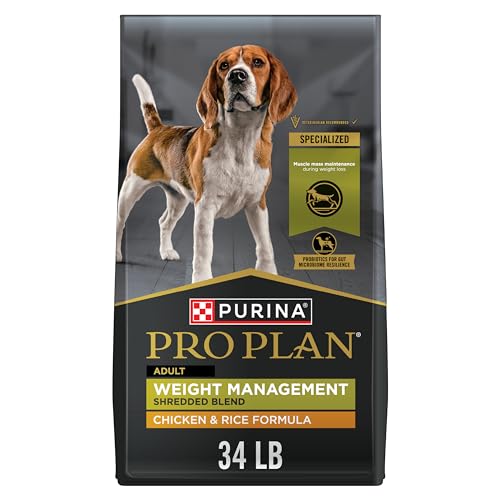
Purina Pro Plan Adult Dry Dog Food
Backed by more AAFCO feeding trials than any other brand. Real chicken as the #1 ingredient, formulated by full-time Purina nutritionists and veterinary researchers since 1986.
✓ Prime Check Price on Amazon →The Guaranteed Analysis: What It Actually Tells You
The guaranteed analysis on every dog food bag lists crude protein, crude fat, crude fiber, and moisture — minimums for the first two, maximums for the latter two. What many owners don't know is that these are on an "as-fed" basis, meaning moisture content heavily skews comparisons between kibble and wet food.
To compare foods accurately, you need to convert to dry matter basis (DMB). The formula: divide the nutrient percentage by (100 minus the moisture percentage), then multiply by 100. A wet food with 8% protein and 78% moisture has a DMB protein of 36.4% — comparable to most kibbles. Without this conversion, wet food always looks protein-poor.
The guaranteed analysis also doesn't tell you about caloric density. A kibble with 340 kcal/cup requires meaningfully different portion sizes than one at 475 kcal/cup, and feeding according to the bag's generic guidelines without accounting for your specific food's caloric density is one of the most common causes of canine obesity. According to the Association for Pet Obesity Prevention's 2023 survey, approximately 59% of dogs in the United States are classified as overweight or obese — a figure directly tied to caloric miscalculation.
For large breed puppies specifically, calcium-to-phosphorus ratio matters more than either value alone. The ideal range is 1.2:1 to 1.4:1 calcium to phosphorus. Ratios outside this window — particularly calcium above 1.8% on a dry matter basis — are associated with developmental orthopedic disease (DOD), which includes conditions like hip dysplasia exacerbation and osteochondrosis. This is why "large breed" puppy formulas are not interchangeable with standard puppy formulas.
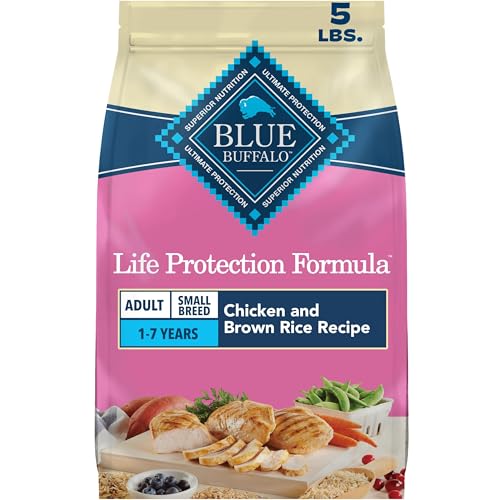
Blue Buffalo Life Protection Formula Adult Dog Food
Deboned chicken as the first ingredient, no corn/wheat/soy, with LifeSource Bits — a blend of antioxidants, vitamins, and minerals added after cooking to preserve potency.
✓ Prime Check Price on Amazon →Life Stage Formulations: Not Just Marketing
AAFCO recognizes three nutritional life stages for dogs: growth (puppies), adult maintenance, and all life stages. A food labeled "all life stages" must meet the higher nutrient requirements of puppies — which means it typically has higher protein, fat, calcium, and phosphorus than an adult maintenance formula.
For most healthy adult dogs, "all life stages" food is fine. But for large breed adults prone to joint stress, the elevated caloric and mineral density of an all-life-stages food can contribute to unnecessary weight gain and potentially accelerated joint wear over years. The extra calcium and phosphorus, while safe for growing puppies, provide no benefit and carry some risk for adult dogs fed to excess.
Senior formulations are less standardized than growth or adult formulas — AAFCO does not have a defined "senior" nutrient profile, meaning any brand can label a food "senior" without meeting distinct requirements. What actually matters for older dogs depends on their individual health status: dogs with chronic kidney disease (CKD) need phosphorus restriction (below 0.5% DMB in moderate cases), while dogs with muscle wasting need higher, not lower, protein levels. The blanket reduction of protein in "senior" foods — a holdover from outdated kidney disease management protocols — is not supported by current veterinary nutritional science for healthy aging dogs.
For working dogs with energy expenditure above baseline, caloric needs can be 2–3 times higher than a sedentary dog of the same weight. A 60-pound herding dog in active work may need 1,800–2,200 kcal/day compared to 1,100–1,300 kcal/day for a 60-pound couch dog. Active-formula foods with fat content above 18% on a dry matter basis can help meet these needs without requiring impractical feeding volumes.
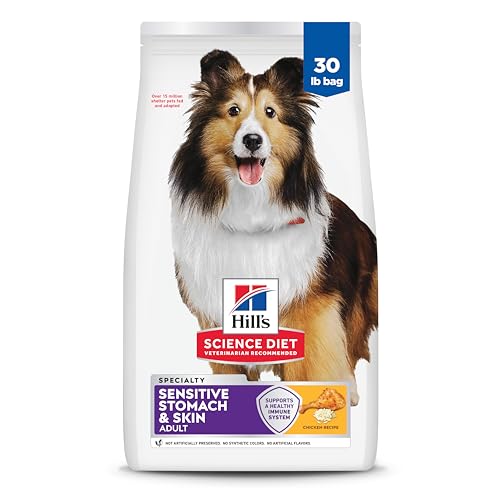
Hill's Science Diet Adult Dry Dog Food
The #1 vet-recommended dog food brand in the US. Precisely balanced nutrition developed with veterinarians — chicken meal and whole grain oats as primary ingredients, no artificial flavors or preservatives.
✓ Prime Check Price on Amazon →Grain-Free vs. Grain-Inclusive: What the FDA Research Actually Found
Between 2018 and 2022, the FDA investigated a potential association between grain-free diets — particularly those high in legumes like peas, lentils, and chickpeas — and dilated cardiomyopathy (DCM), a serious heart condition in dogs. The investigation identified 515 reports of DCM in dogs, with a disproportionate number eating legume-heavy, grain-free diets.
The research did not establish causation and the case has not been fully resolved. As of 2024, the FDA has not issued a formal prohibition or recall based on the investigation. However, the University of California Davis School of Veterinary Medicine, which conducted independent nutritional analysis, found that dogs eating grain-free diets had measurably lower plasma taurine levels than dogs eating grain-inclusive diets — and taurine deficiency is one established cause of DCM. Certain breeds (Golden Retrievers, Dobermans, Portuguese Water Dogs) appear more susceptible.
The key variable isn't the absence of grains per se — it's the presence of high levels of peas, lentils, and potatoes as primary carbohydrate and protein sources. These legumes contain dietary components that may interfere with taurine synthesis or absorption. Rice, oats, barley, and corn — the grain sources used in traditional kibbles — do not appear to carry the same association.
If you're feeding grain-free for genuine reasons (confirmed grain allergy, which is much rarer than commonly believed — true grain allergies represent fewer than 10% of all canine food allergies), the safest approach is a formulation with a low legume content and confirmed taurine supplementation above AAFCO minimums, ideally verified by feeding trials rather than formulation alone.
Manufacturing Standards That Separate Good Brands from Great Ones
The World Small Animal Veterinary Association (WSAVA) published a set of questions every owner should ask pet food manufacturers before trusting a brand with their dog's nutrition. These are not marketing checkboxes — they're evidence of actual quality control infrastructure.
The key questions from WSAVA's guidelines include: Does the company employ a full-time, board-certified veterinary nutritionist (not a consulting arrangement)? Are their formulas developed using AAFCO feeding trials, or by nutrient calculation alone? Do they conduct internal and external quality testing on each batch? Do they own or directly control their manufacturing facilities?
Nutrient calculation (also called formulation adequacy) means the recipe meets AAFCO minimums on paper. Feeding trials mean the food was actually fed to dogs for a minimum of 6 months under controlled conditions, with blood panels monitored at the end. Feeding trials catch issues that calculation cannot: bioavailability problems, ingredient interaction effects, real-world palatability at adequate intake levels.
Brands that own their manufacturing facilities have faster recall response times and better batch traceability — two data points that become important when something goes wrong. According to FDA recall records, brands using third-party co-manufacturers represented a higher proportion of serious contamination recalls between 2016 and 2023 than brands with proprietary manufacturing.
Smaller brands with transparent supply chains, board-certified nutritionists on staff, and feeding-trial-validated formulas exist at multiple price points. The price premium for a quality brand over a mass-market option typically ranges from $0.40 to $1.20 per day for a medium-sized dog — less than the co-pay for one veterinary visit caused by nutritional deficiency.
What to Avoid
Ingredient splitting to obscure plant protein dominance. If you see three or more legume derivatives (peas, pea protein, pea flour, pea starch, lentils, chickpeas) in the first eight ingredients alongside a single named meat, the protein fraction is not what it appears.
Vague protein sources. "Meat" and "poultry" without species identification are untraceable and compositionally inconsistent batch to batch. "Chicken," "beef," "turkey," "salmon" — species specificity is a baseline quality indicator.
AAFCO "formulated to meet" labeling without feeding trial history. This means the recipe was calculated to meet nutrient minimums, not that dogs were fed it successfully. For adult maintenance, formulation is generally sufficient. For growth and reproduction, AAFCO feeding trials provide meaningfully stronger assurance.
Proprietary blends that obscure dosing. Some brands list "proprietary probiotic blend" or "joint support complex" without individual ingredient quantities. You cannot assess efficacy of a joint supplement without knowing the glucosamine dose — 500 mg/day is a typical minimum effective dose for a 50-pound dog; many "joint support" formulas provide 50–100 mg/day at feeding guidelines, which is below the threshold for any measurable effect.
Excessive synthetic vitamin and mineral supplementation. A long list of isolated vitamins at the end of an ingredient list isn't inherently bad, but when it's paired with whole-food ingredients from sources of questionable bioavailability, those vitamins are compensating for nutritional gaps rather than complementing a strong base formula.
Expert Perspective
Dr. Lisa Freeman, DVM, PhD, DACVN — board-certified veterinary nutritionist and professor at Tufts University's Cummings School of Veterinary Medicine — has been among the most published researchers on the DCM-diet connection and canine nutritional standards. Her research group has consistently emphasized that "boutique, exotic ingredient, and grain-free (BEG) diets are a concern not because grain-free is inherently harmful, but because many of these diets come from companies lacking the nutritional expertise, research investment, and manufacturing oversight of established brands." Freeman's 2019 paper in the Journal of the American Veterinary Medical Association remains the foundational reference on evaluating pet food companies beyond the ingredient label — she advocates evaluating the company, not just the formula.
FAQ
How do I know if a dog food brand is trustworthy?
Start with WSAVA's manufacturer questionnaire: ask whether the brand employs a board-certified veterinary nutritionist full-time (not as a consultant), whether their formulas are validated by AAFCO feeding trials rather than calculation alone, and whether they conduct third-party testing on finished products. Brands that answer these questions transparently — and publish the answers — demonstrate the infrastructure for consistent quality. If a company's website features extensive lifestyle photography but no nutritionist credentials, that's a meaningful signal. The cost of a board-certified DACVN on staff is a choice every company makes.
Is expensive dog food actually better for my dog?
Not categorically — price correlates weakly with nutritional quality at the top end of the market. Some premium brands charge for exotic proteins and clever branding without additional nutritional merit. Some mid-range brands owned by large manufacturers with significant R&D budgets and feeding-trial programs outperform small boutique brands at twice the price. The useful question isn't cost per bag, but cost per day at recommended feeding levels, adjusted for caloric density. A 475-kcal/cup kibble fed at ½ cup per meal is economically different than a 340-kcal/cup food requiring ¾ cup per meal — and total caloric intake determines health outcomes more than the price on the label.
Can I feed my dog the same food for its entire life?
For most healthy dogs, yes — but "all life stages" formulas exist for this purpose. Puppies and adults can eat the same food if it's AAFCO-certified for all life stages. However, large breed puppies (expected adult weight over 55 lbs) should eat a large-breed puppy formula through approximately 12–18 months, because calcium and phosphorus control during growth phases directly affects skeletal development. At the other end of life, dogs with age-related conditions — kidney disease, joint disease, cognitive decline — benefit from prescription or therapeutic diets tailored to their specific condition. These are distinct from "senior" commercial formulas, which have no regulated standard.
Are raw diets better than commercial kibble?
The evidence doesn't support a blanket claim that raw diets are superior to high-quality commercial food. A 2022 study in PLOS ONE found that raw-fed dogs had measurable differences in gut microbiome composition, but the health implications of those differences remain unclear. The significant, well-documented risks of raw feeding include Salmonella and Campylobacter contamination — not just for the dog but for humans in the household. The FDA has documented pathogens in commercially prepared raw pet foods at higher rates than in commercial kibble. For immunocompromised dogs, puppies under 6 months, and households with immunocompromised humans, the CDC recommends against raw feeding. If you choose raw, AAFCO-compliant formulations with verified nutritional balance are safer than home-prepared recipes, which are consistently found to be nutritionally incomplete in peer-reviewed analysis.
How often should I switch dog food brands?
There's no requirement to switch, but a full transition (not an abrupt change) every 6–12 months can maintain gut microbiome diversity — assuming the change is gradual over 7–10 days (25% new/75% old, then 50/50, then 75% new/25% old, then full transition). Abrupt changes cause gastrointestinal upset in most dogs because the digestive enzyme profile adjusts to the food's composition over time. If your dog is doing well on a food — consistent energy, healthy coat, stable weight, normal digestion — there's no nutritional mandate to switch. If you're changing due to a recall or availability issue, the 7–10 day transition protocol still applies even when urgency is high.
What does "by-products" mean on a dog food label and should I avoid it?
"By-products" has a poor reputation based largely on marketing from brands that don't use them — not on nutritional evidence. The AAFCO definition of "poultry by-product meal" includes necks, feet, undeveloped eggs, and intestines, but excludes feathers, heads, and manure. Organ meat (liver, kidney, heart) is technically a by-product of the meat industry and is among the most nutrient-dense ingredients in a dog's diet, rich in B vitamins, iron, and taurine. The concern is variability: "by-products" without species identification can have inconsistent composition. Named by-products — "chicken liver," "beef kidney" — are both specific and nutritionally valuable. Unnamed "poultry by-product meal" is less consistent and harder to evaluate.
How much protein does my dog actually need?
AAFCO minimums for adult dogs are 18% crude protein on a dry matter basis — but these are floors, not targets. Most veterinary nutritionists recommend 25–30% DMB protein for healthy adult dogs as a more realistic optimum. Working dogs and lactating females have higher requirements, closer to 35–40% DMB. The upper limit matters mostly for dogs with kidney disease, where restriction to 18–22% DMB (paired with high-quality, bioavailable protein) is often recommended to reduce uremic waste load. For healthy dogs, research does not support the idea that high protein diets damage kidneys — a 2008 study in the Journal of Veterinary Internal Medicine found no adverse renal effects in healthy dogs fed 45% DMB protein over 2 years. The kidney-damage concern applies specifically to dogs with existing renal insufficiency.
The best food for your dog is the one formulated correctly, manufactured consistently, and eaten willingly — the bag's design is irrelevant.