7 Best Aquarium Plants for Beginners in 2026 (Science-Backed Picks)
Roughly 60% of first-time planted tank owners lose their plants within the first three months — not because they chose difficult species, but because they chose the wrong species for their setup and then tried to fix it with fertilizers and CO2 equipment they didn't need. The real answer to a thriving planted aquarium almost always starts with plant selection, not chemistry.
Live aquarium plants do more than look good. They consume ammonia and nitrite through biological uptake, compete directly with algae for nutrients and light, produce dissolved oxygen during photosynthesis, and provide behavioral enrichment for fish — particularly fry-raising species like bettas and livebearers. A 2019 study published in Aquaculture found that planted tanks maintained 23% lower nitrate concentrations than equivalent filtered tanks without live plants under identical stocking conditions. That's not a negligible difference. That's measurable water quality improvement from choosing the right greenery.
The problem is the beginner plant market is full of mislabeled, low-quality, and flatly unsuitable species. Terrestrial plants like lucky bamboo, peace lilies, and mondo grass are regularly sold as "aquatic" by major pet retailers — they survive submerged for weeks before slowly dying and fouling the water. This article covers only true aquatic plants, selected for resilience under imperfect conditions: variable lighting, no CO2 injection, and beginner-level fertilization.
As an Amazon Associate I earn from qualifying purchases. This doesn't affect our recommendations.
Table of Contents
- Why Most Beginners Kill Their Plants (It's Not Light)
- Java Fern: The Indestructible Epiphyte
- Anubias: Slow, Bulletproof, and Algae-Resistant
- Java Moss and Carpet Plants That Actually Work
- Stem Plants for Fast Growth and Algae Control
- Crypts: The Underrated Mid-Ground Workhorse
- Amazon Sword for Larger Tanks
- What to Avoid (Including "Aquatic" Plants That Aren't)
- Expert Perspective
- FAQ
Why Most Beginners Kill Their Plants (It's Not Light)
The instinct when plants decline is to add more light. This is usually wrong, and it's the mistake that creates the most problems. Excess light without sufficient plant mass and nutrient uptake is the primary driver of algae outbreaks in beginner tanks. Most beginner-appropriate plants — Anubias, crypts, Java fern — thrive under 6 to 8 hours of moderate light at 5,000–7,000K color temperature, equivalent to roughly 20–40 PAR (photosynthetically active radiation) at substrate level.
The actual reason most beginners kill their plants is substrate chemistry and planting technique. Species like Amazon swords and crypts are heavy root feeders. Planted in plain gravel with no root tabs or nutrient-rich substrate, they stall within weeks. Epiphytic plants — Java fern, Anubias — die when their rhizome is buried in substrate, because the rhizome is the plant's nutrient-uptake structure and must remain above the gravel. This single error, attaching or burying the rhizome in substrate instead of tying it to hardscape, accounts for the majority of Java fern and Anubias deaths in beginner tanks.
Water parameters matter less than people think for these species, within reason. Most beginner-appropriate plants tolerate a pH range of 6.0–7.8, temperatures between 68°F and 82°F, and general hardness of 4–20 dGH. What they don't tolerate is ammonia above 0.25 ppm — elevated ammonia is toxic to plant tissue at the cellular level, not just to fish. If your tank is still cycling, plant it with fast-growing stem plants like hornwort first, which are exceptionally tolerant and will help process ammonia while the cycle completes.
Java Fern: The Indestructible Epiphyte
Java fern (Microsorum pteropus) is native to Southeast Asia, where it grows on rocks and driftwood in fast-moving streams. This origin explains everything about why it's ideal for beginners: it evolved to grip onto hard surfaces in turbulent water, which means it doesn't need substrate at all, tolerates high flow, and has leaves thick enough to resist most herbivorous fish.
The plant grows by rhizome — a horizontal stem that anchors to surfaces and produces both roots (which absorb nutrients directly from the water column) and leaves. Maximum leaf length in established specimens reaches 8–14 inches, with a slow growth rate of roughly one new leaf per 2–3 weeks under moderate conditions. Java fern doesn't require CO2 injection or liquid fertilizer, though a dose of all-in-one liquid fertilizer at half the recommended rate every two weeks will noticeably accelerate growth.
The critical setup instruction: never bury the rhizome. Tie it to driftwood or attach it to rock using black cotton thread, fishing line, or aquarium-safe superglue gel. Once the roots attach to the surface (typically 4–6 weeks), the thread can be removed. Java fern in good conditions develops small plantlets along the edges of mature leaves — these can be left to drop and colonize nearby surfaces, or removed and attached elsewhere.
One genuine quirk: java fern leaves turn transparent and then brown before dying, which is normal shedding, not disease. Holes in leaves are also common and harmless. Black spots on the back of leaves are not rot — they're sporangia, the reproductive structures, and indicate a healthy, well-established plant.

Greenpro Java Fern on Driftwood
Pre-attached to driftwood — just place it in your tank. No planting, no substrate needed. Nearly indestructible in low light.
✓ Prime Check Price on Amazon →Anubias: Slow, Bulletproof, and Algae-Resistant
Anubias barteri and its varieties (nana, coffeefolia, nana petite) are arguably the most forgiving aquarium plants available. They originate from West and Central Africa, growing in shaded river margins and streams with dense overhead canopy — which is why they're adapted to very low light conditions, as low as 10–15 PAR. In a brightly lit aquarium, Anubias will actually grow better in shaded areas, wedged under driftwood or behind taller plants where light is indirect.
Growth rate is extremely slow: approximately one leaf per 3–4 weeks under typical beginner conditions. This is actually an advantage for low-maintenance setups because the plant requires almost no trimming, and its dense, waxy leaves are chemically unappealing to most herbivorous fish, including goldfish and cichlids — two species notorious for destroying softer-leaved plants. Anubias nana stays compact at 4–6 inches, making it suitable for the foreground or midground of tanks as small as 5 gallons.
Anubias is an epiphyte like Java fern: rhizome must stay exposed above substrate. Attach it to hardscape using the same method — thread or gel glue. The main vulnerability is algae on the leaves, specifically green spot algae (GSA) and green dust algae (GDA). Because Anubias grows so slowly, algae can establish on leaf surfaces before the plant grows out of reach. Nerite snails are the most effective biological solution — a single nerite can clean algae from several Anubias leaves per day without damaging the plant tissue. Adding two to three nerite snails per established Anubias plant keeps GSA under control without chemical intervention.
Anubias propagates by rhizome division. When the rhizome reaches 3–4 inches, it can be cut with clean scissors and the cut end attached to a new surface. Both pieces continue growing independently.

GreenPro Anubias Barteri Live Plant
The most tolerant plant in the hobby — grows in near-zero light, thick waxy leaves fish can't damage, attaches to any surface.
✓ Prime Check Price on Amazon →Java Moss and Carpet Plants That Actually Work
Java moss (Taxiphyllum barbieri) is a bryophyte — not a true aquatic plant but a moss adapted to fully submerged conditions — and it behaves very differently from rooted or epiphytic species. It requires no substrate, no rooting, no rhizome attachment, and no fertilization. It can simply be placed in the tank, weighted down with a small stone, or tied loosely to driftwood, and it will grow.
Growth rate is moderate: roughly 1–2 inches per month under moderate light (20–30 PAR). Under higher light, growth accelerates significantly, and the moss becomes bushier and more compact in structure. In low light, it grows sparse and stringy. Java moss is most commonly used to cover driftwood and rock to create naturalistic aquascapes, to provide spawning sites for egg-laying fish like tetras and danios, and to give fry dense hiding cover that increases survival rates substantially.
Carpet plants — species grown along the substrate to create a grass-like floor — are the one category where beginners regularly fail because most true carpeting plants require CO2 injection and high light (60+ PAR). Lilaeopsis brasiliensis (micro sword) is the exception. It grows slowly even under CO2 injection, which means it barely grows without it, but it does survive and spread without injection given high light (40+ PAR) and root tab fertilization placed every 4–6 inches in the substrate. Cryptocoryne parva is another honest low-tech carpet option, staying under 3 inches with a growth rate of approximately one new leaf per 2 weeks.
For most beginners, Java moss on a flat piece of driftwood creates the visual effect of a carpet without the demanding requirements.
Stem Plants for Fast Growth and Algae Control
Stem plants grow from a central stem with leaves arranged along it, and they grow fast — which is exactly what a cycling or newly set up tank needs. Fast-growing stem plants consume ammonia, nitrite, nitrate, and phosphate directly from the water column, dramatically reducing the nutrient load available to algae. This is called competitive exclusion, and it's one of the most effective algae-prevention strategies available.
Hornwort (Ceratophyllum demersum) is the most extreme example. Native to North America, it can grow 5–10 inches per week under moderate light without any supplemental fertilization or CO2. It's completely rootless — it floats freely or can be loosely planted in substrate, where it will anchor with minimal roots. Its needlelike leaves are allelopathic, meaning they release compounds that inhibit the growth of certain algae and competing plant species. This makes hornwort effective as a companion to slower-growing species in a new tank, but it should be thinned aggressively once the tank stabilizes — left unchecked, it will shade out everything below it.
Water wisteria (Hygrophila difformis) is a stem plant with a broader growth habit. It reaches 12–20 inches in height, tolerates water temperatures between 70°F and 82°F, and grows at approximately 2–4 inches per week under moderate light. It's one of the few stem plants that will thrive in medium-hard water (up to 15 dGH), making it suitable for tap-water tanks that aren't softened. Propagation is extremely simple: cut a 4-inch stem, remove the bottom leaves, and plant it in substrate — it roots within 5–7 days.
Both hornwort and water wisteria can be grown as floating plants if substrate planting isn't desired. Floating stem plants receive maximum light at the water surface and grow fastest in this configuration.
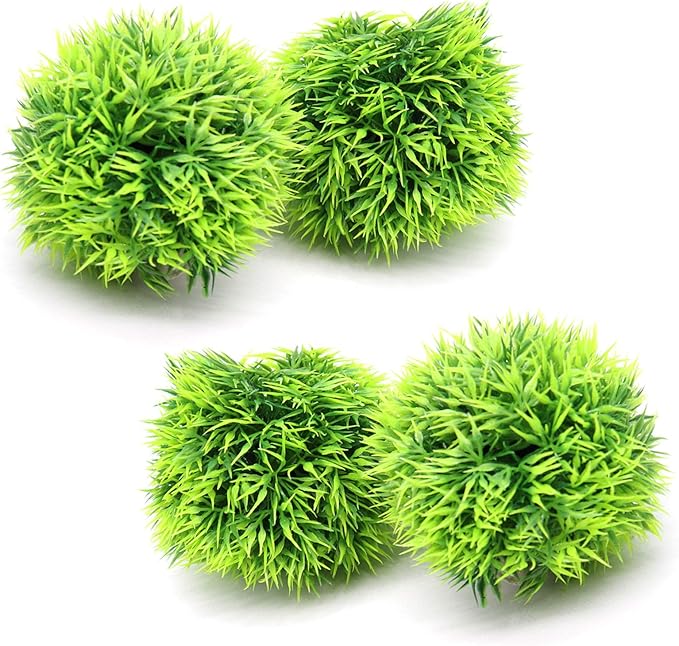
Besimple Silk Artificial Aquarium Plants
For tanks where live plants won't work — goldfish, low-light setups, or zero-maintenance. Soft silk edges won't damage fish fins.
✓ Prime Check Price on Amazon →Crypts: The Underrated Mid-Ground Workhorse
Cryptocoryne species — commonly called crypts — are native to Sri Lanka and Southeast Asia, where they grow in slow-moving rivers and streams with silty, nutrient-rich substrate. This origin tells you two things: they are root feeders that need nutritious substrate or regular root tab supplementation, and they are adapted to low-to-moderate light with significant seasonal variation.
The beginner warning that always needs to be given with crypts: crypt melt. When crypts experience a change in water parameters — even relatively minor shifts in pH, temperature, or hardness — the leaves will melt away entirely within 2–3 days, leaving only the roots and rhizome. This looks like death. It is not death. The plant is reallocating resources and will produce new leaves adapted to the new environment within 2–4 weeks, usually bushier than before. Do not pull up a melted crypt. Leave it alone, maintain consistent conditions, and it will return.
Cryptocoryne wendtii is the most common beginner crypt, reaching 4–8 inches in height with brownish-green leaves that add mid-ground texture most other beginner plants can't provide. C. lutea stays slightly smaller at 3–6 inches and tolerates harder water than most crypts (up to 18 dGH). C. parva stays under 3 inches and works as a slow carpet option. All three tolerate a wide pH range (6.0–7.8) and temperatures from 70°F to 82°F.
Fertilization for crypts: place one root tab per plant at planting, and replace every 60–90 days. In inert substrate (gravel, sand), this is non-negotiable. In nutrient-rich aquasoil, root tabs are optional for the first 6–12 months, after which the substrate will begin to exhaust its nutrients.
Amazon Sword for Larger Tanks
Echinodorus grisebachii (bleheri) — the Amazon sword — is one of the most recognizable aquarium plants in the hobby, and for good reason. It's a heavy root feeder that produces broad, lance-shaped leaves reaching 12–20 inches in established specimens, making it visually dominant in any tank it's placed in. It's also exceptionally adaptable: it tolerates pH from 6.5 to 7.5, temperatures from 72°F to 82°F, and moderate light (20–40 PAR), and it survives without CO2 injection as long as root nutrition is sufficient.
The tank size requirement is real and frequently ignored. A mature Amazon sword needs 40 gallons minimum to reach its full size without consuming the entire tank. In smaller tanks — 10 to 20 gallons — smaller echinodorus species like E. tenellus (pygmy chain sword, maximum 4 inches) or E. parviflorus (black amazon sword, maximum 10 inches) are more appropriate.
Amazon swords propagate vegetatively by sending out runners — horizontal stolons that produce plantlets at intervals. These plantlets can be left attached until they develop 4–5 leaves and their own root system (typically 6–8 weeks), then cut and replanted or given away. A single healthy Amazon sword will generate 20–30 daughter plants per year under good conditions.
Root tabs every 3 inches around the plant's root zone, replaced every 8–10 weeks, are the single most important factor in Amazon sword health. A plant declining in an otherwise healthy tank almost always responds within 2–3 weeks to fresh root tab placement.
What to Avoid (Including "Aquatic" Plants That Aren't)
Mislabeled terrestrial plants sold as aquatic: Lucky bamboo (Dracaena sanderiana), peace lily (Spathiphyllum), pothos (Epipremnum aureum), and mondo grass (Ophiopogon japonicus) are the most common offenders. They survive submerged for 4–12 weeks before rotting and releasing ammonia into the water. Some, like pothos, can be grown with roots submerged but leaves and stems above water, which is a legitimate and attractive setup — but they are not submersed aquatic plants.
Cabomba and other "easy stem plants": Cabomba caroliniana is routinely marketed as beginner-appropriate. It is not. It requires CO2 injection and high light (50+ PAR) to maintain its feathery leaf structure — under beginner conditions, it sheds leaves constantly, clogs filters, and declines within weeks.
Dwarf baby tears (HC Cuba): Hemianthus callitrichoides is one of the most demanding carpet plants in the hobby, requiring CO2 injection, 60+ PAR light, and precise fertilization. It is completely inappropriate for beginners regardless of how it's marketed.
Plants sold as "no light needed": No aquatic plant survives without light. Claims of "low light" are relative — even low-light species require 8+ lumens per liter for basic photosynthesis.
Expert Perspective
"Beginners tend to overcomplicate planted tanks by treating them like a chemistry experiment from day one," says Dr. Dennis Kelsh, an aquatic ecologist and adjunct professor at the University of Minnesota who has maintained planted research aquaria for over 20 years. "The most successful beginner planted tanks I've seen are simple: a handful of Java fern and Anubias tied to driftwood, a few fast-growing stem plants in the back, a basic nutrient-rich substrate, and a standard aquarium light on an 8-hour timer. The plants do the rest. The water stays clear. The fish are healthy. And the hobbyist doesn't burn out chasing perfection."
His recommendation for beginners who want to carpet their tank without CO2: "Use Java moss on a flat piece of slate or driftwood. It looks like a lawn, it requires nothing, and it gives fry a place to hide. That's a better outcome than a failed HC Cuba carpet that crashed the tank."
FAQ
Do aquarium plants need CO2 injection to survive?
No — the beginner plants listed in this article (Java fern, Anubias, crypts, Amazon sword, hornwort, water wisteria, Java moss) all photosynthesize using dissolved CO2 naturally present in aquarium water, which typically ranges from 3–8 mg/L without injection. CO2 injection elevates this to 20–30 mg/L, which accelerates growth significantly, but it's not required for plant survival. If you add CO2 injection, you'll also need to increase light and fertilization proportionally — a single variable change in one direction demands adjustment in the others.
How many hours of light do beginner aquarium plants need per day?
The standard recommendation is 8 hours per day for most beginner plants, with a spectrum of 5,000–7,000K (full spectrum or "daylight" bulbs). Shorter photoperiods (6 hours) can prevent algae in newly set up tanks. Longer than 10 hours significantly increases algae risk without meaningfully improving plant growth. Use a timer — inconsistent photoperiods stress plants and encourage algae. For tanks near windows receiving natural light, reduce artificial lighting to 6–7 hours and monitor for algae development.
Why are my aquarium plant leaves turning yellow?
Yellow leaves in aquarium plants typically indicate iron deficiency (new growth yellowing, with veins staying green — interveinal chlorosis) or nitrogen deficiency (older leaves yellowing first, uniformly). Iron deficiency responds to a chelated iron supplement or all-in-one liquid fertilizer containing iron at 0.1–0.5 mg/L concentration. Nitrogen deficiency in a stocked tank is uncommon because fish waste provides ammonia, which plants convert to nitrate — if you're seeing nitrogen deficiency, your tank is likely understocked or you're doing very frequent, large water changes. Also rule out inadequate light before attributing yellowing to nutrients.
Can I keep aquarium plants with goldfish?
Goldfish will eat many aquarium plants aggressively, which limits your options significantly. Anubias is the most goldfish-resistant plant available — its waxy, thick leaves are chemically unpalatable and goldfish typically leave them alone after initial investigation. Java fern is sometimes nibbled but usually survives because goldfish find its texture unpleasant after the first bite. Hornwort and water wisteria are almost always eaten quickly. For goldfish tanks, attach Anubias to hardscape at the back and sides, use smooth river rocks as decor, and accept that your plant list is shorter than for tropical community tanks.
Do I need a special substrate for aquarium plants?
For epiphytic plants (Java fern, Anubias, Java moss) — no. They attach to hardscape and feed from the water column. For root-feeding plants (Amazon sword, crypts, water wisteria) — yes, substrate nutrition matters significantly. Options: (1) aquasoil, which is nutrient-rich from manufacture and lasts 12–18 months; (2) inert substrate (gravel, sand) with root tabs placed every 4–6 inches, replaced every 8–10 weeks. Minimum substrate depth for rooted plants is 2.5–3 inches. Shallower substrate limits root development and nutrient uptake.
What's causing algae to grow on my aquarium plants?
Algae on plant leaves — particularly green spot algae (GSA) on Anubias and Java fern — is almost always caused by an imbalance between light, nutrients, and plant mass. Either there's too much light for the plant density, phosphate levels are elevated above 0.5 mg/L, or there's insufficient biological competition for nutrients. Short-term fix: add nerite snails (one per 5 gallons) which are among the most effective algae grazers without harming plants. Long-term fix: increase plant mass, reduce photoperiod to 7 hours, add fast-growing stem plants to the back of the tank to consume excess nutrients.
Can I plant aquarium plants in a tank that's still cycling?
Yes — and it's actually recommended. Fast-growing plants like hornwort and water wisteria directly absorb ammonia and ammonium from the water column through a process called assimilatory nitrogen uptake, reducing ammonia spikes during the cycling period. This doesn't replace the bacterial nitrogen cycle but supplements it. Avoid sensitive or slow-growing plants (crypts, dwarf varieties) during cycling, as ammonia above 0.25 ppm can damage their tissue. Add Java fern and Anubias once ammonia and nitrite drop below 0.25 ppm and the cycle shows signs of stabilization.
How do I know if my aquarium plant is actually aquatic and not a terrestrial plant?
True aquatic plants have thin, flexible leaves that move freely in water current and no waxy surface coating. Their leaves emerge directly from a stem, rhizome, or stolon without a rigid petiole structure adapted to support the leaf against gravity. Hold the plant underwater: true aquatics look natural submerged and their leaves orient toward light. Terrestrial plants sold as aquatic often have thick, waxy leaves (peace lily, pothos), rigid leaf structure, or leaves that flop unnaturally in water. Check the Latin name against the Tropicos database (tropicos.org) maintained by the Missouri Botanical Garden to confirm whether a species is genuinely aquatic.
A healthy planted tank isn't about having the most plants or the most equipment — it's about choosing the right species for the conditions you actually have, then getting out of the way and letting them grow.