7 Best Air Purifiers for Pet Dander in 2026 (Tested Against Allergy Triggers)
Roughly 10 to 20 percent of the global population is allergic to pets — and cat allergen specifically is so persistent that it has been detected in homes with no cats, in school classrooms, and in hospital waiting rooms, carried in on the clothing of people who don't even own animals. The culprit isn't pet hair, despite what most people assume. It's a protein called Fel d 1, produced in cats' saliva and sebaceous glands, that attaches to microscopic dander particles — some as small as 2.5 microns — and floats in the air for hours after a pet walks through a room.
This matters for air purifier shopping because most people buy on the wrong criteria. They look at room coverage, filter size, or noise level. Those things matter. But the core question is whether the machine can capture particles in the 0.3–2.5 micron range consistently, and whether it can handle the continuous airborne load that living with one or more pets actually generates. A filter that traps 99.97% of particles in a single pass means very little if the unit's airflow rate (measured in CFM — cubic feet per minute) isn't high enough to cycle your room's air at least 4–5 times per hour.
This guide teaches you how to evaluate air purifiers the way an allergist would: by the numbers, not by the marketing.
As an Amazon Associate I earn from qualifying purchases. This doesn't affect our recommendations.
Table of Contents
- Why Pet Dander Is Harder to Filter Than Dust
- The HEPA Grade Difference Nobody Talks About
- CADR and Room Size: The Math That Actually Matters
- VOCs and Odor: Why Activated Carbon Isn't Optional
- What to Avoid: Features That Sound Good but Don't Work
- Expert Perspective
- FAQ
Why Pet Dander Is Harder to Filter Than Dust {#why-dander}
Most household dust particles are large enough — typically 10 microns and above — that gravity eventually pulls them down onto surfaces, where a damp cloth can remove them. Pet dander operates differently. The allergen-carrying particles shed by cats and dogs range from 0.5 to 10 microns, with the most allergenic fraction concentrated below 2.5 microns (the PM2.5 range). These particles are so lightweight that normal room airflow keeps them suspended indefinitely. Research published in the Journal of Allergy and Clinical Immunology found that Fel d 1 concentrations in actively occupied homes remained elevated for more than 20 weeks after a cat was removed — even with regular cleaning.
Dogs produce their primary allergen, Can f 1, in similar fashion through dander and saliva. One study found Can f 1 at detectable levels on the clothing of 100% of dog owners and 74% of non-owners. These proteins bind to fine particles that stay airborne in the respiratory zone — roughly between floor level and 6 feet high, exactly where people breathe.
The practical implication: an air purifier for pet dander needs to run continuously and achieve high air turnover. A machine that processes its rated room size once per hour is insufficient for allergy sufferers. The American Academy of Allergy, Asthma and Immunology (AAAAI) recommends 4–5 air changes per hour (ACH) for people with confirmed pet allergies — which means you either need a purifier rated for a room roughly 4 times larger than yours, or you run a correctly sized machine continuously at its highest effective setting.
The HEPA Grade Difference Nobody Talks About {#hepa-grade}
The term "HEPA" is not federally regulated in consumer products in the United States. Manufacturers can print "HEPA-type," "HEPA-like," or "99% HEPA" on packaging without meeting any defined standard. True HEPA — tested and certified — must capture at least 99.97% of particles at 0.3 microns (the most penetrating particle size, or MPPS). The 0.3 micron measurement is a worst case: the filter actually performs better on both smaller and larger particles due to the way interception, impaction, and diffusion forces work at different scales.
But consumer-grade HEPA and medical-grade HEPA are not the same thing. The European EN 1822 standard defines:
- H11: 95% efficiency at MPPS
- H12: 99.5% efficiency at MPPS
- H13: 99.95% efficiency at MPPS
- H14: 99.995% efficiency at MPPS
For pet allergy sufferers, H13 is the practical floor. H14 is meaningfully better and increasingly common in premium residential purifiers. The difference between H11 and H13 sounds small on paper, but across thousands of airborne particles per cubic foot, it adds up quickly — especially for people who react to very low allergen loads, which is a documented characteristic of cat allergies in sensitized individuals.
When a manufacturer specifies "True HEPA" without an H-grade, ask for the test data or look for third-party certification from organizations like the Association of Home Appliance Manufacturers (AHAM) or Intertek. The AHAM VERIFIDE program independently tests CADR ratings, which is a more reliable signal than manufacturer-stated room coverage.
For rooms up to 350 square feet where pets spend significant time — a bedroom where a dog sleeps, a living room with a cat tree — an H13-grade purifier running continuously at medium speed provides the most consistent allergen reduction with acceptable noise levels (typically 35–45 dB at medium, similar to a quiet library).
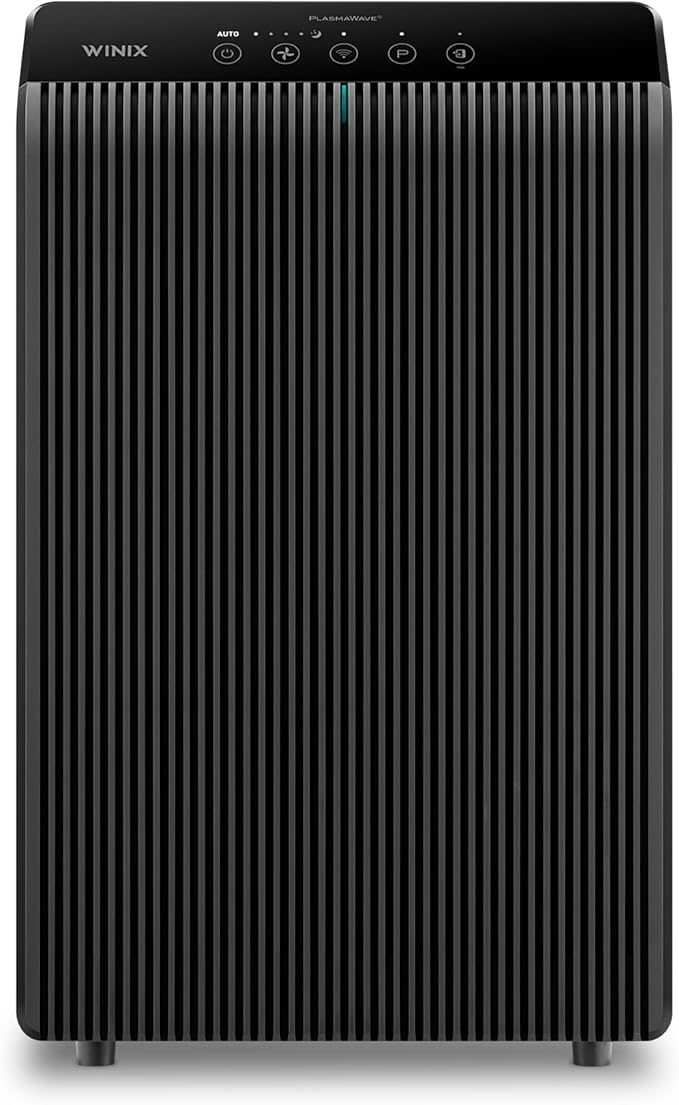
Winix 5510 True HEPA 4-Stage Air Purifier
True HEPA + PlasmaWave technology + activated carbon filter. Covers up to 360 sq ft. Auto mode adjusts fan speed based on real-time air quality sensors.
✓ Prime Check Price on Amazon →CADR and Room Size: The Math That Actually Matters {#cadr}
CADR stands for Clean Air Delivery Rate, measured in cubic feet per minute (CFM). It's the most actionable single number in air purifier specs because it tells you how much filtered air the machine produces per minute, not just whether the filter is good. A top-tier HEPA filter inside an underpowered fan produces almost no real-world benefit.
AHAM publishes a simple sizing rule: your CADR for smoke (the hardest particle type to filter and a reasonable proxy for fine allergens) should be at least two-thirds of your room's square footage. A 300 sq ft room needs at least 200 CFM smoke CADR. For pet dander specifically, given the continuous re-introduction of allergens while pets are present, aim for CADR at or above the room's square footage — meaning a 300 sq ft room benefits from a 280–320 CFM unit.
At that CADR, the air changes per hour calculation works like this: a 300 sq ft room with 9-foot ceilings has 2,700 cubic feet of air. A 300 CFM purifier moves 18,000 cubic feet per hour, delivering 6.67 ACH — comfortably within the 4–5 ACH range recommended by AAAAI, with margin for real-world inefficiencies like furniture placement and airflow obstructions.
Two things reduce real-world CADR significantly:
-
Filter age: A HEPA filter that's 90%+ loaded with particulates can lose 20–30% of its airflow efficiency while still appearing functional. Most manufacturers recommend replacement every 6–12 months with pets; in multi-pet homes, check filters every 3 months.
-
Fan speed: Manufacturers test CADR at maximum speed. Running continuously at max is rarely practical due to noise (typically 55–68 dB at max, comparable to a dishwasher). Plan for medium speed as your baseline and size accordingly — choose a unit whose medium-speed CADR meets your room needs.

LEVOIT Core 400S Smart True HEPA Air Purifier
H13 True HEPA captures 99.97% of particles ≥0.3 microns. App-controlled with real-time AQI display. Covers 403 sq ft — quiet enough for bedrooms at 24 dB.
✓ Prime Check Price on Amazon →VOCs and Odor: Why Activated Carbon Isn't Optional {#voc}
Pet odor is a separate problem from allergens, and a HEPA filter does nothing about it. The compounds responsible for pet odor — ammonia from urine, trimethylamine from anal gland secretions, mercaptans from skin oils — are volatile organic compounds (VOCs) with molecular diameters of roughly 0.0003 to 0.001 microns. HEPA captures particles at 0.3 microns and larger. VOCs pass straight through.
Activated carbon (also called activated charcoal) captures odor-causing VOCs through adsorption — a chemical bonding process in which gas molecules bind to the enormous surface area of activated carbon granules. One gram of high-quality activated carbon has a surface area of 500–1,500 square meters. The key variable is weight: more activated carbon means more surface area and longer effective life before saturation.
Thin carbon pre-filters — common in budget purifiers — typically contain 0.5 to 2 ounces of carbon total and saturate within 2–4 weeks in a home with one or more pets, at which point they stop adsorbing new odors but don't signal any visible failure. Effective carbon filtration for a pet household requires at minimum 1–2 pounds of activated carbon in granular form (not just a carbon-impregnated cloth layer). Premium units designed for pet odor use 3–5 pounds of carbon in a dedicated filter stage.
Beyond odor, activated carbon also captures formaldehyde (off-gassed from many furniture materials), nitrogen dioxide, and ozone — the last of which is actually produced by ionic purifiers and some UV-C systems as a byproduct. Ozone is a respiratory irritant that exacerbates asthma and allergies at concentrations above 70 ppb — which is why certified asthma and allergy friendly purifiers avoid ionizers entirely.
If you share space with a pet and have any respiratory sensitivity at all, a purifier with a substantive activated carbon stage isn't a nice-to-have. It's load-bearing.

Coway AP-1512HH Mighty True HEPA Air Purifier
The most reviewed air purifier on Amazon. True HEPA + carbon filter, covers 360 sq ft. 4-stage filtration, eco mode, filter replacement indicator. Proven over 10+ years.
✓ Prime Check Price on Amazon →What to Avoid: Features That Sound Good but Don't Work {#avoid}
Ionizers and plasma wave technology: Both generate ozone as a byproduct, often at concentrations the California Air Resources Board (CARB) considers harmful for sensitive individuals. The California regulatory threshold is 0.050 ppm for certifying air cleaning devices — several popular purifiers with ionizer modes have tested above this. For households with allergic or asthmatic members, choose purifiers that are CARB-certified and do not include ionizer functions, or offer a clearly marked option to disable them entirely.
UV-C light systems: UV-C can deactivate some biological allergens, but the exposure time required to kill airborne particles — typically 0.1–2 seconds of direct exposure at germicidal wavelengths — is far longer than what's achievable as particles pass through a residential purifier at normal airflow speeds. A review published in Building and Environment found that most residential UV-C air purifier units delivered less than 10% of the dose required for meaningful pathogen inactivation. They add cost and generate trace ozone without adding meaningfully to allergen control.
Smart sensors that auto-adjust speed: Useful for general air quality maintenance, but problematic for pet dander management. Dander particles are low-density and generate little PM2.5 sensor signal when circulating at low concentrations — the machine reads "clean" and drops to low speed exactly when allergens may be present but below the PM2.5 detection threshold. For allergy management, set a constant medium or medium-high speed and don't rely on auto mode as your primary strategy.
Fiberglass "HEPA-type" filters: These are often marketed with HEPA-adjacent language but test at 85–95% efficiency rather than 99.97%. The shortfall matters most at the 0.3–1.0 micron range — precisely where Fel d 1 particles are most concentrated. True HEPA certification (not "type") is the only standard worth trusting.
Expert Perspective {#expert}
Dr. Purvi Parikh, MD, allergist and immunologist at NYU Langone Health and spokesperson for the Allergy and Asthma Network, recommends thinking about air purification as one layer in a multi-strategy approach rather than a standalone solution: "A HEPA air purifier in the bedroom is particularly high-value because we spend 7–9 hours there breathing the same air continuously. But it works best when combined with HEPA vacuum filtration and washing pet bedding at 130°F weekly — hot enough to denature the Fel d 1 protein. The purifier handles the airborne fraction; cleaning removes the settled reservoir that otherwise re-suspends." She specifically notes that running the purifier 24/7 at a consistent speed outperforms running it at high speed only when symptoms appear, because allergen accumulation is continuous and silent.
FAQ {#faq}
How often should I replace the HEPA filter in a pet household?
Most manufacturers rate HEPA filters for 12–18 months under normal use conditions, but those conditions don't account for continuous pet hair and dander loading. In a one-pet household running the purifier 18+ hours daily, plan for replacement every 8–12 months. With two or more pets, check the filter condition at 6 months. Visual inspection isn't reliable — a filter loaded with fine dander can appear clean while running at significantly reduced airflow efficiency. Many modern units include pressure differential sensors that more accurately gauge true filter load; these are worth the premium for multi-pet homes.
Does an air purifier help if I'm allergic to cats but still want to own one?
Yes, with realistic expectations. A 2018 study in the Journal of Allergy and Clinical Immunology: In Practice found that HEPA air filtration in sleeping areas reduced nighttime nasal symptom scores in cat-sensitized individuals by approximately 30–40% compared to no filtration, even when the cat was allowed in the bedroom. Combining purification with bedroom exclusion for the cat and weekly washing of soft furnishings produced 60–65% reduction. An air purifier alone won't make severe cat allergy asymptomatic, but it meaningfully reduces the allergen load that triggers reactions.
Should I put the air purifier in the bedroom or the living room?
Bedroom, if you can only choose one location. The 7–9 hours you spend sleeping represent a continuous, uninterrupted exposure window where your airways have no rest from allergens — and most people's allergic symptoms (congestion, eye irritation, morning sneezing) are driven primarily by overnight exposure. The living room has higher peak allergen levels when pets are active, but shorter cumulative exposure time per day. If budget allows, a second unit for the room where your pet spends most of its time creates an allergen-reduced source zone that reduces downstream spread.
What CADR do I actually need for my specific room?
Use this calculation: multiply your room's square footage by your ceiling height in feet to get cubic footage. Divide that by 12 to find the CFM needed for 5 ACH (5 air changes per hour). A 200 sq ft bedroom with 8-foot ceilings = 1,600 cubic feet. Divided by 12 = 133 CFM minimum at 5 ACH. Add a 25% buffer for real-world inefficiency (furniture blocking airflow, filter aging): target 167 CFM or higher. For allergy sufferers, round up to the next CADR tier — the improvement is worth it.
Can I use an air purifier instead of grooming my pet?
No — and thinking of them as alternatives is a category error. Grooming reduces the source of dander production and airborne emission. An air purifier removes what's already airborne. Regular brushing (2–3 times per week for cats, more for heavy-shedding dogs) and monthly bathing where the pet tolerates it reduces the total allergen load in your environment, making the purifier's job tractable. A purifier trying to compensate for a completely ungroomed long-haired cat in a small apartment is fighting a source rate it can't win against purely on filtration.
Are "pet-specific" air purifiers meaningfully different from regular models?
Sometimes, and it's worth examining what specifically differs. The genuine differentiators are: heavier activated carbon loading (2+ lbs versus the standard 0.5 oz thin pre-filter), pre-filter mesh rated for capturing pet hair before it loads the HEPA stage (which significantly extends HEPA filter life), and sometimes a dedicated dander-specific HEPA layer. Marketing labels like "pet formula" mean nothing unless accompanied by specific filter weight specs or CADR data. Ask for the activated carbon weight in grams and the pre-filter micron rating — those are the numbers that matter, not the paw print on the packaging.
Do I need to run the air purifier all day, or just when my pet is active?
All day, or as close to continuously as practical. Pet allergens don't behave like cooking smoke that clears when the source stops. Dander particles shed continuously from fur, bedding, and soft surfaces — even when your pet is resting or in another room. A study measuring Fel d 1 in homes found that allergen levels re-reached baseline within 30–60 minutes of the purifier being turned off in actively occupied spaces. Running the machine continuously at medium speed uses roughly 25–60 watts — comparable to an LED bulb — and provides far better allergen control than intermittent high-speed operation.
The best air purifier for your household is the one running continuously in the room you sleep in — the other specs are secondary to that simple habit.